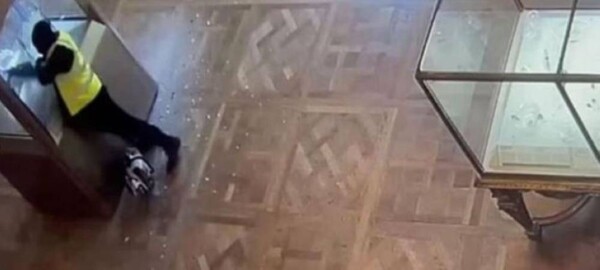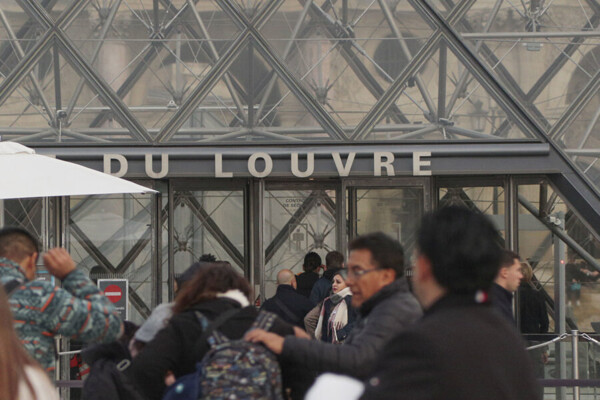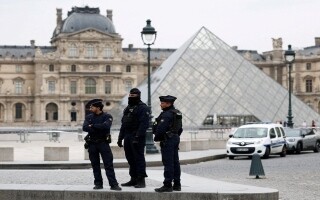
An official in charge of the administrative investigation into the security of the Louvre reported today that preventing the two thieves who stole jewelry from one of its halls in October from escaping could have been possible had it not been for a delay of 'about 30 seconds'. The first conclusions of the investigation revealed a 'chronic underestimation' of the risk of theft at the prestigious institution, according to Culture Minister Rachida Dati. 'Elements of the Securitas company or police officers could have prevented the thieves from escaping had it not been for a 30-second gap,' said General Inspector for Cultural Affairs Noel Corban before the Culture Committee in the Senate, the upper house of the French parliament. Another investigator, Pascal Menori, noted that an external camera 'actually recorded the arrival of the thieves, the operation of the crane, the ascent of the two thieves to the balcony, and their hasty departure after a few minutes'. However, these recordings did not receive immediate attention, and when a security officer viewed them, 'it was too late because the thieves had already left the Apollo Hall' where the crown jewels were on display, according to Corban. Corban pointed out that the investigators, whom the Minister of Culture had requested to carry out the investigation to uncover security gaps in the museum, 'were very surprised' by 'the problem of transferring (results) of security audits' within the institution, especially during the change in museum leadership in 2021 with the arrival of Laurence des Cars. An audit conducted by the jewelry house Van Cleef & Arpels in 2019 had identified weaknesses in the Apollo Hall, but the results of this audit were not presented to the new management. The chairman of the parliamentary committee, Senator Laurent Lafon, stated that this theft 'is not a one-off failure', attributing it 'not to a combination of bad luck, but to decisions that were not taken to ensure security', while all the vulnerabilities 'had been identified in the context of several previous investigations whose results were largely identical'. The next hearings in this case will take place in the Senate next week amid increasing problems for this historic museum, founded during the French Revolution. Following the theft of eight 19th-century jewelry pieces valued at around 88 million euros on October 19, the Louvre was forced to close one of its exhibition halls due to damage. The museum is also facing a strike by its employees, which begins on Monday, demanding the creation of new jobs and priority for the most urgent tasks.