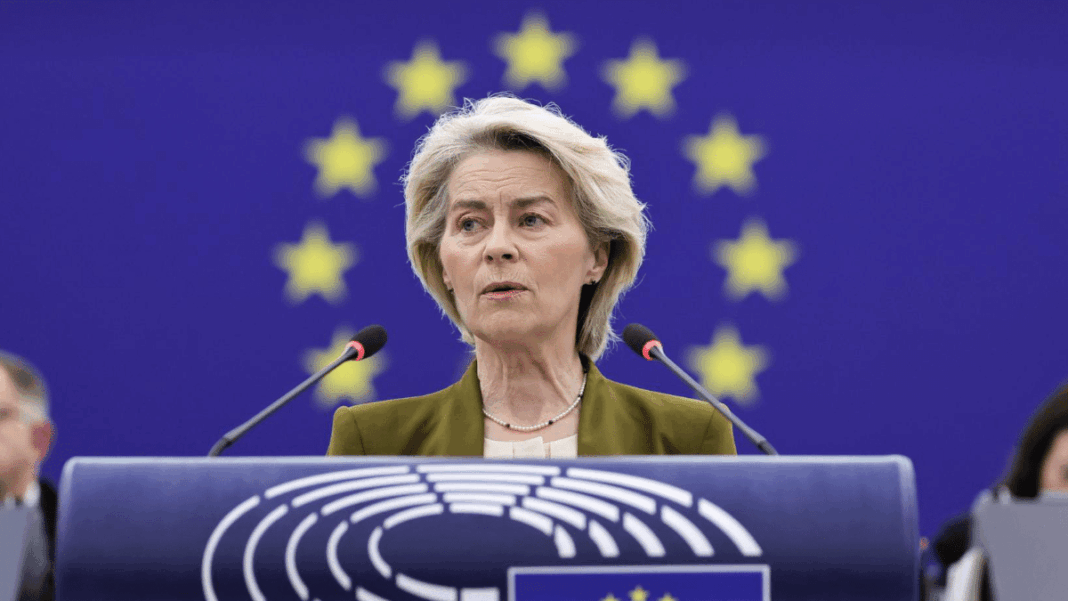
European Commission President Ursula von der Leyen admitted in Paris what until recently seemed unthinkable at the top of Brussels: Europe made a “strategic error” in moving away from nuclear energy. The Commission itself had already updated its state aid rules to facilitate sector support, and the Paris summit also served to reinforce the discourse of a European nuclear ecosystem with global ambition. Von der Leyen highlighted that the continent has about 500,000 skilled workers in the sector, more than the United States and China, and that the EU has already proposed over 5 billion euros in its next budget for fusion research, including ITER. In this view, nuclear energy ceased to be a purely environmental or cultural discussion and became an issue of sovereignty, competitiveness, and strategic security. The shift is not happening in a vacuum. After years of dogmas, the bloc is beginning to accept that nuclear energy is back at the center of the discussion about power, industry, and the future. The signal is clear: Brussels wants to stop debating whether nuclear energy should make a comeback and start debating how to do it quickly and at scale. The new European narrative starts from an uncomfortable but increasingly widespread conclusion: without abundant, reliable, and relatively cheap energy, the continent risks lagging behind in industries that will define the next decade, from robotics to artificial intelligence. Von der Leyen argued that Europe only has two major domestic sources of low-carbon electricity: renewables and nuclear, and maintained that the most efficient system combines the stability of the atom with the variability of wind and solar, supported by storage, flexible demand management, and better-integrated grids. Without naming it too much, the background reference was Germany, which closed its last reactors in 2023 and ended up becoming the emblem of a strategy that prioritized nuclear retreat while increasing the continent's vulnerability to imported fossil fuels and structurally high energy prices. The change in approach is not just doctrinal: it comes with money, regulation, and a new roadmap. To this are added “sandboxes” for cross-border regulatory testing of more agile approval schemes, cooperation between member states to harmonize rules and permits, and an industrial policy aimed at turning Europe into a hub for the next generation of nuclear power. The discussion is therefore far from closed, but the political climate has changed. Ultimately, what the summit left behind is a high-voltage recognition: Europe paid dearly for an energy retreat that weakened its autonomy and increased its exposure to external crises. Meanwhile, other European countries that for years viewed the atom with distance—such as Denmark, the Netherlands, or even sectors of German politics—are beginning to review their positions. Von der Leyen's bet does not imply abandoning renewables, but admitting that the European transition cannot be sustained solely on green voluntarism and imported fossil fuel dependence. The central announcement of the summit was a European strategy for Small Modular Reactors (SMR), with the goal of having that technology operational in the early 2030s. Von der Leyen promised a 200 million euro guarantee to mobilize private investment in innovative nuclear technologies, with resources from the European carbon market. And whether this change comes too late or not at all will be one of the questions that will mark the next decade of Europe. On the other side, Austria, Luxembourg, and Ireland maintain strong objections, and environmental groups warn that SMRs are still not a mature or cheap solution. For von der Leyen, this collapse was not a technological fatality or an inevitable consequence of the market, but the result of a wrong political decision. Now she is trying to correct course.